


Amigurumi animals, Cat, New patterns
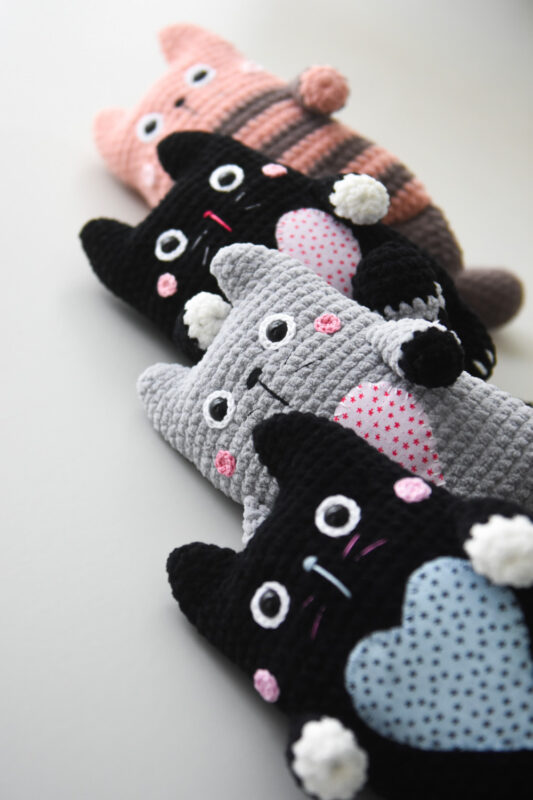
Soft Chenille Cat
Nov
I’ve mentioned this before, but some toys just seem to come together easily, and everything flows naturally with them. Meanwhile, with others, it’s a constant struggle, one obstacle after another.
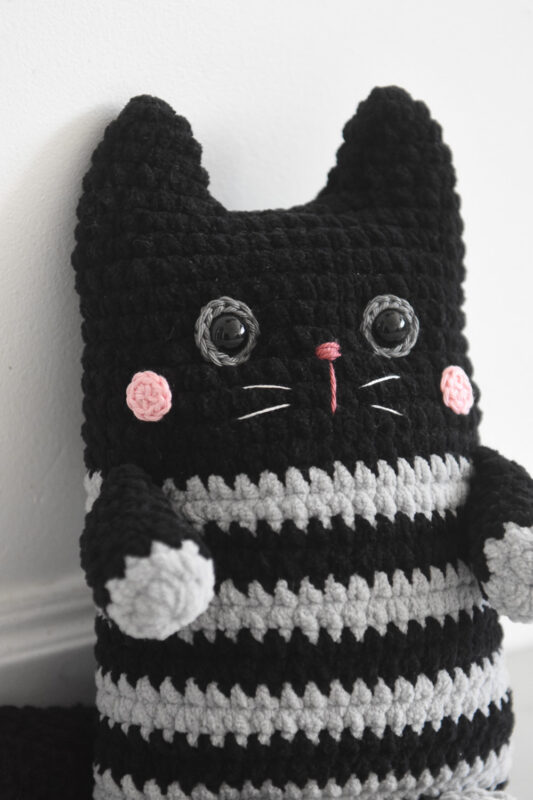
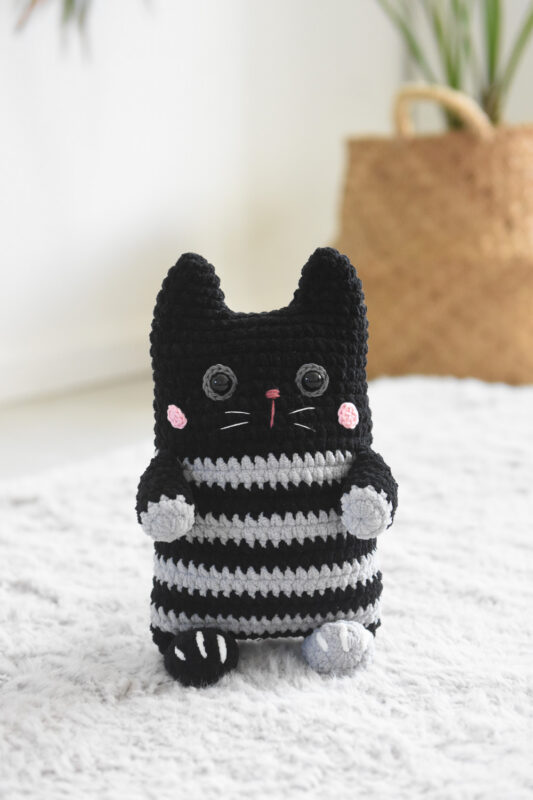
The soft chenille cat, I´ve named the pattern The Envelope Cat, falls more into that second category. But despite all the challenges, the pattern in English is now finished and available in my shop.
THE BIRTH OF THE ENVELOPE CAT
I crocheted this quirky rectangular cat about six months ago, in May, back when I was still working with Amigurumi Studio. It was naturally the next step after creating the panda bear, which was my first chenille toy. Often it goes like this: you make one, and if you like the material, another idea comes along in the same wave. That’s how it happened with this cat.
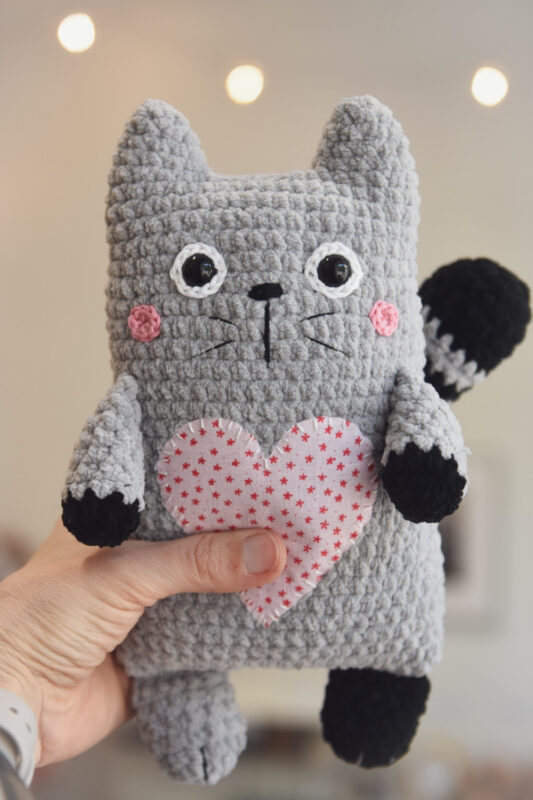
The first photo shows the very first version of the Envelope Cat. It was a gray cat with a striped tail and a pink heart on its tummy. The concept of the cat stayed the same, although I made some technical improvements along the way.
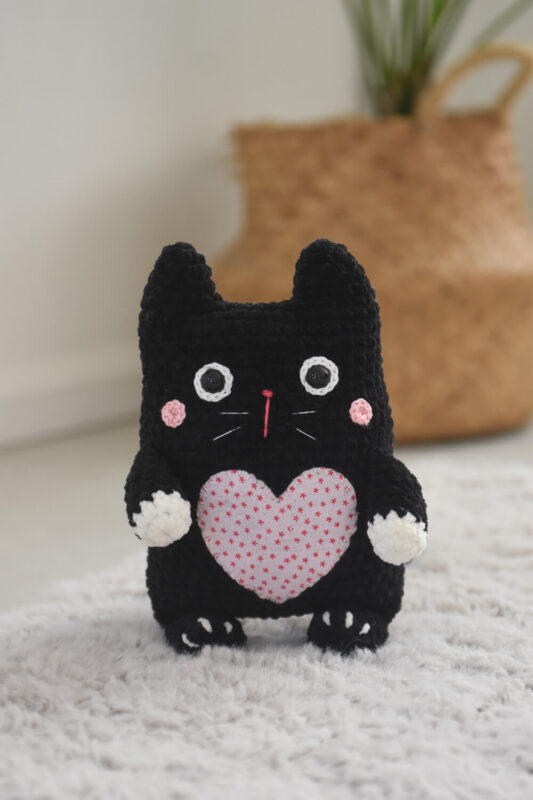
For clarification: my original goal was to make a black cat. But anyone who has crocheted with black chenille knows how difficult it is to count stitches. That’s why I made the first sample gray — so I could actually see what I was doing and make better notes or adjustments.
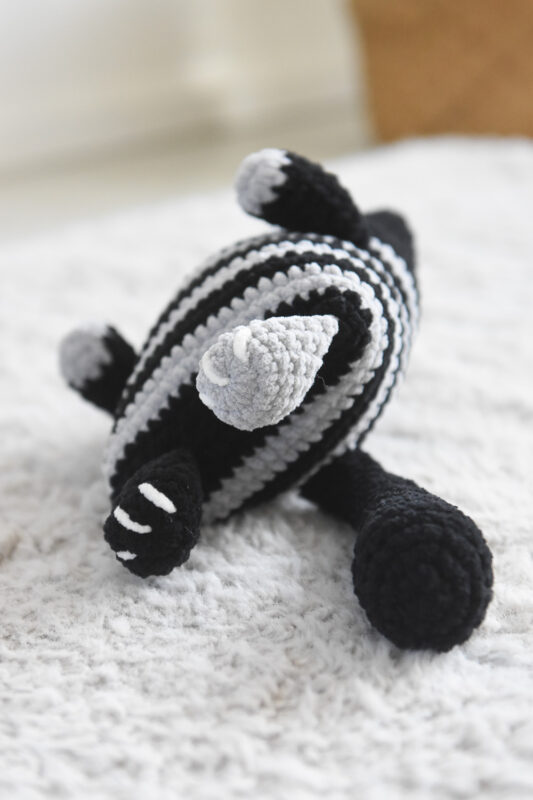
There was another initial motivation for creating the cat: a good friend of mine had recently learned to crochet toys and kept asking for simple, cute, and stylish patterns. That’s when the idea hit me: why not try making a cat with minimal seams, where the ears flow seamlessly into the head, and the face can be stitched on during the process, so there’s no tricky stitching at the end?
Everything worked out, and in the excitement of making the cat, several different color variations were created, including striped cats. Then I started writing the pattern — but that’s when things started going wrong…
WHAT WENT WRONG?
I only realized my big mistake after photographing all the material. I had attached the cat’s eyes in the wrong place and photographed the entire pattern with the incorrect eye placement.
The wrong placement meant one row too low, but it completely ruined my mood. I knew that ideally I should start photographing from scratch, because the photos and text MUST match, but I had lost the motivation and just couldn’t bring myself to do everything over again.
And so the cat sat unfinished. I thought the world could manage without it.
FORGETTING PERFECTIONISM
But a few weeks ago, I changed my mind and sent my perfectionism packing. Why?
First, I had made an Instagram post asking people whether they thought I should write the pattern for the cat or not. Even though the post was old, positive responses kept trickling in, giving me confidence that people liked the cat.
Perhaps even more important was the fact that my friend, for whom I had originally made the cat, truly enjoyed the pattern. She crocheted several versions of the cat and excitedly experimented with different colors. It was exactly how she likes it — a simple pattern and a quirky, unique design.
And then I decided to let go of my perfectionism. So, if you decide to use The Envelope Cat pattern, know that when it comes to the eye placement, you should trust the text, not the photos.
Qué interesante es conocer el perfeccionismo desde otro punto de vista. (También, lo soy).
A mí, tu creación me parece perfecta. Una preciosidad de gato, y las fotos, como siempre, todas bellas. (A veces, son cosas que sólo uno ve… ☺️)
Hace años te sigo. ¡Tu trabajo es muy bello! ✨️
Saludos cordiales desde Chile